


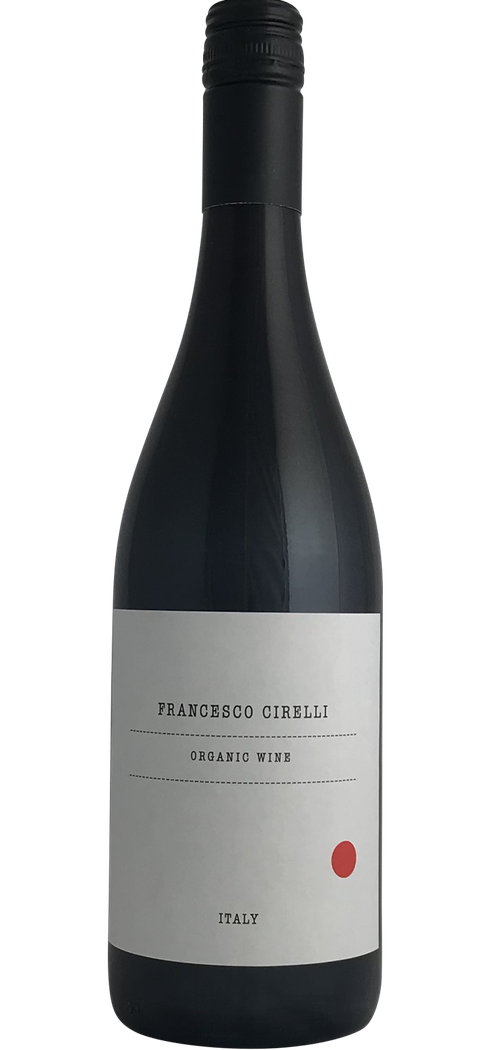
Cirelli Montepulciano 2017
Primary flavours

Cranberry

Purple Bramble Berries

Red Cherry

Red Plum

Black Pepper

Cherry Blossom

Fresh Sage

Sweet Spices
Details
Montepulciano is planted across Italy, but achieves greatest expression in Central Italy, and indeed the greatest wines of all come from the eastern coast - the region of Abruzzo. Here it's colour belies its strength - pale wine of power and dryness that are built for the dining table.
Cirelli's organic, unfiltered example is an absolute belter. A nose of dried red fruits, with hints of cherry and leather, it also exhibits some trademark oregano herbaceousness. All gentle so far, but savoury.
Then palate kicks into gear, with tannin and grip. Really earthy. Medium bodied, and some dusty tannins really add power to the back of the palate.
The fruit is nearly forgotten in this powerhouse, and you can't be anywhere else but Italy. Great stuff!
To say that Italy has an ancestral and ancient connection with wine would be a heck of an understatement. This is a country which really shaped wine as we know it today, and you cannot pass through a single village in Italy where winemaking traditions don’t abound, nor where the locals won’t beam with pride as they tell you about the millennia of viticulture that led to their own unique and individual styles. This sense of heritage is key to the wines of Francesco Cirelli, a visionary Abruzzo winemaker who has made it his mission to keep alive some of the most ancient winemaking techniques. While many wineries around the world are turning back the clock, and making wines according to pre-industrialised methods, Cirelli is going one step further, and is looking to ancient Roman and Greek vinification for inspiration. Cirelli is synonymous with the use of clay and terracotta amphorae for producing his highly characterful, deeply flavoured Montepulciano wines. He deeply believes that by making his wine in baked earth, he is taking the concept of terroir to new and exciting heights, and stripping away the complications and unnecessary extra processes of contemporary winemaking. It’s hard to disagree with him: this is winemaking which literally puts the vintner and the wine in touch with the earth, in touch with history, and in touch with simple, effective, and time-honoured methods - and the results are utterly delicious. Despite the unusual nature of his techniques, Francesco Cirelli is no fussy historian or meticulous obsessive - he’s a young, excited, and passionate vintner who simply wants to capture the real flavours of the land he works with. After all, three thousand years of history can’t be wrong...
To say that Italy has an ancestral and ancient connection with wine would be a heck of an understatement. This is a country which really shaped wine as we know it today, and you cannot pass through a single village in Italy where winemaking traditions don’t abound, nor where the locals won’t beam with pride as they tell you about the millennia of viticulture that led to their own unique and individual styles. This sense of heritage is key to the wines of Francesco Cirelli, a visionary Abruzzo winemaker who has made it his mission to keep alive some of the most ancient winemaking techniques. While many wineries around the world are turning back the clock, and making wines according to pre-industrialised methods, Cirelli is going one step further, and is looking to ancient Roman and Greek vinification for inspiration. Cirelli is synonymous with the use of clay and terracotta amphorae for producing his highly characterful, deeply flavoured Montepulciano wines. He deeply believes that by making his wine in baked earth, he is taking the concept of terroir to new and exciting heights, and stripping away the complications and unnecessary extra processes of contemporary winemaking. It’s hard to disagree with him: this is winemaking which literally puts the vintner and the wine in touch with the earth, in touch with history, and in touch with simple, effective, and time-honoured methods - and the results are utterly delicious. Despite the unusual nature of his techniques, Francesco Cirelli is no fussy historian or meticulous obsessive - he’s a young, excited, and passionate vintner who simply wants to capture the real flavours of the land he works with. After all, three thousand years of history can’t be wrong...
Read more
Specs
Region
Abruzzo
country
Italy
Grape type
Montepulciano
Wine Maker
Cirelli
Alcohol
12.5%
Vintage
2017
Cellar period
3-5 years
Production method
Unfiltered
Temperature
Room Temperature 15°C-18°C
Pairing guide
Ask any fan of this refined Italian red, and they’ll tell you that when it comes to food pairing, it’s among the best in the world. Want to really achieve culinary fireworks with this top wine? Pair it with lamb or goat - Montepulciano’s symphony of spices and tart acidity works wonders with the wild flavours of these meats (even more so if marinated in deeply flavourful herbs). However, it’s also a brilliant match for bolognese sauce, meatballs, almost any kind of beef or game dishes, and the deep funk of a good truffle dish too. For those looking for more surprising - yet no less delicious - pairings, drink this wine with Korean food. Soy sauce, garlic, ginger, and sesame oil are incredibly good with Montepulciano, and Korean cuisine fans will simply adore what this wine does to your palate alongside your oriental favourites.
Read more
Food

Veal

Pizza

Basil

Roasted Vegetables

Sirloin Steak
Tastes

Tangy

Earthy
Moods

Relaxed

Always A Winner
Seasons
Autumn

Spring
You might
also like
Wine region


Abruzzo, Italy
Abruzzo is located in the southern central part of Italy, east of Rome. The region not only is amazing to pronounce but also produces amazing wines. The two most famous varieties to come out of Abruzzo are Montepulciano and Trebbiano. The region is also known to be the home of the Maremma, which is a sheep guardian dog made famous for looking after Penguins in Warrnambool. The two famed grape varieties have varied levels of quality with the outstanding examples from Emidio Pepe which are truly sought after.
Read more